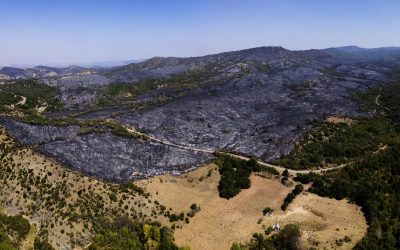
Alongside sustainable grazing practices, the Landscape Fire Management in the Western Balkans Programme emphasizes agroforestry - the intentional integration of trees, shrubs, and crops into farmland and pasture systems, as a vital approach to building fire-resilient...
Blog
Landscape fires and health
Landscape fires - including wildfires, landscape fires, forest fires, and grassland fires - are becoming more frequent, intense, and unpredictable as a result of climate change, unsustainable land-use practices, and human activities. While fire is a natural ecological...
The future of landscape fires in the Western Balkans: risks, realities, and the need for prevention
Landscape fires are becoming an increasingly urgent challenge in the Western Balkans. Rising temperatures, prolonged droughts, and shifting rainfall patterns caused by climate change are creating conditions that make fires more frequent, more intense, and more...
Prevention vs. suppression: Which works better against landscape fires?
Landscape fires are an increasing concern in many regions, including the Western Balkans, where hot, dry summers create the perfect conditions for fires to ignite and spread. When it comes to managing these fires, there are two very different approaches: prevention...
Landscape Fires in the Western Balkans – Mid-Year Situation Analysis 2025
Key messages Nearly 70,000 hectares burned across the region in the first half of 2025. Bosnia and Herzegovina and Serbia experienced the most severe fire conditions to date. 90% of fires human-caused; weak early-warning systems persist. Urgent need to shift from...
Natural methods for landscape fire management – using grazing and agroforestry to manage vegetation
In the face of increasing landscape fire risk across the Western Balkans, one of the most promising solutions lies not in hoses or helicopters - but in hooves and hedges. Grazing and agroforestry, long-standing traditional practices in the region, are being...
Creating fire-resilient landscapes for the future
Creating fire-resilient landscapes in the Western Balkans requires a strategic blend of ecological, social, and policy-driven approaches. The increasing frequency and severity of landscape fires in the region, largely driven by climate change and human activity, call...
Community Involvement in Landscape Fire Management with a focus on Prevention: Local Action for a Regional Challenge
Landscape fire is a growing threat in the Western Balkan region and effectively addressing this challenge requires a multi-faceted approach. Two key elements in this approach are Community Wildfire Protection Plans (CWPPs) and landscape fire management. While...
Fire-resilient ecosystems and landscape fires
Landscape fire resilience is a crucial concept, particularly in regions facing increasing landscape fire threats like the Western Balkans. Understanding how ecosystems withstand and recover from fire disturbances is paramount for effective landscape fire management....
Creating fire resilient landscapes in the Western Balkan
The Western Balkan region is particularly vulnerable to landscape fires. Seasonal droughts, high temperatures, and strong winds create conditions conducive to the rapid spread of fires. This susceptibility is exacerbated by anthropogenic factors such as land-use...
What is a fire-resilient landscape?
A fire-resilient landscape is an intentionally designed and maintained environment to reduce the risk of landscape fire damage while promoting ecological balance. It incorporates adaptive landscape management practices to enhance the landscape's ability to withstand,...
Building landscape fire management awareness
Awareness is a cornerstone of effective landscape fire management. The increasing frequency and intensity of landscape fires, driven by climate change and anthropogenic activities, demand proactive strategies that prioritize awareness at individual, community, and...