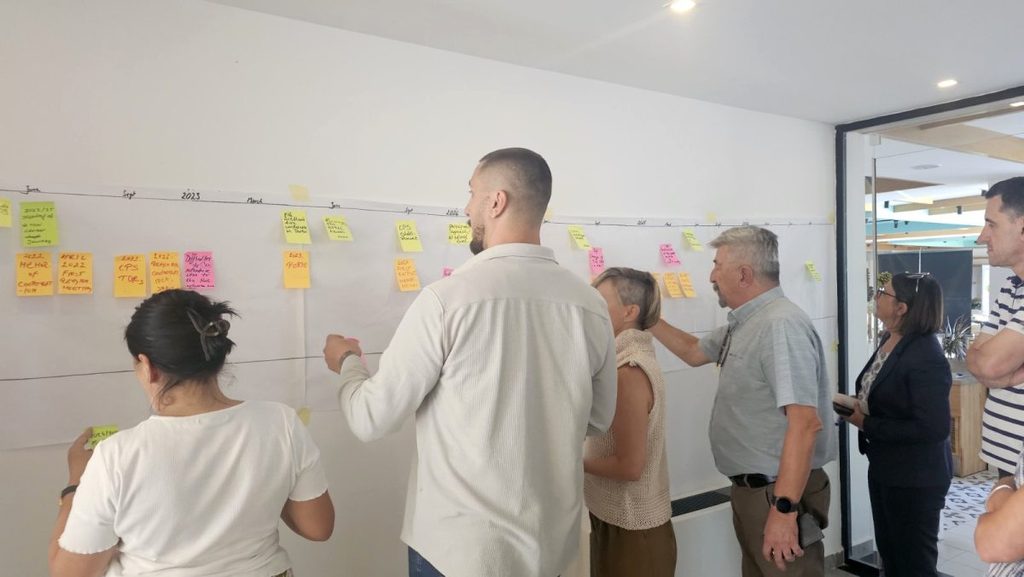
From 21 to 25 September 2026, around 20 representatives of the Landscape Fire Management in the Western Balkans (LFMWB) Programme’s partner institutions gathered in Albania to reflect on LFM progress, exchange regional experiences, and strengthen LFM capacities. As Phase I approaches its conclusion, the gathering provided an opportunity to look back at what has been built since 2022, share experiences and lessons, and look ahead to the next phase of the Programme.
The meetings were organised by the Ministry of Environment in Albania, together with the Country Project Staff, Regional Fire Monitoring Centre (RFMC) and Regional Executive Agency (REA–Farmahem), within the LFMWB Programme, funded by the Swiss Agency for Development and Cooperation (SDC).
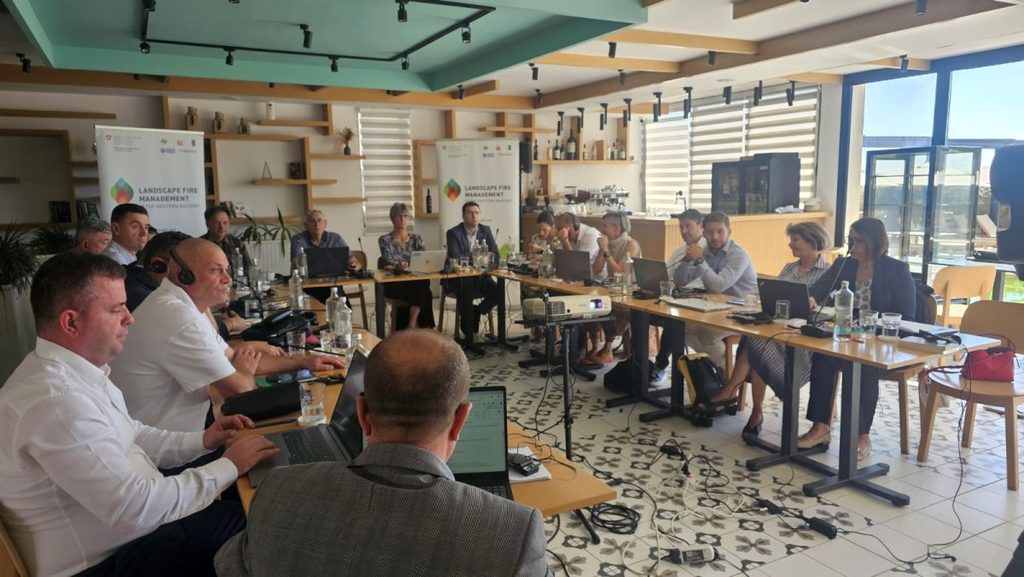
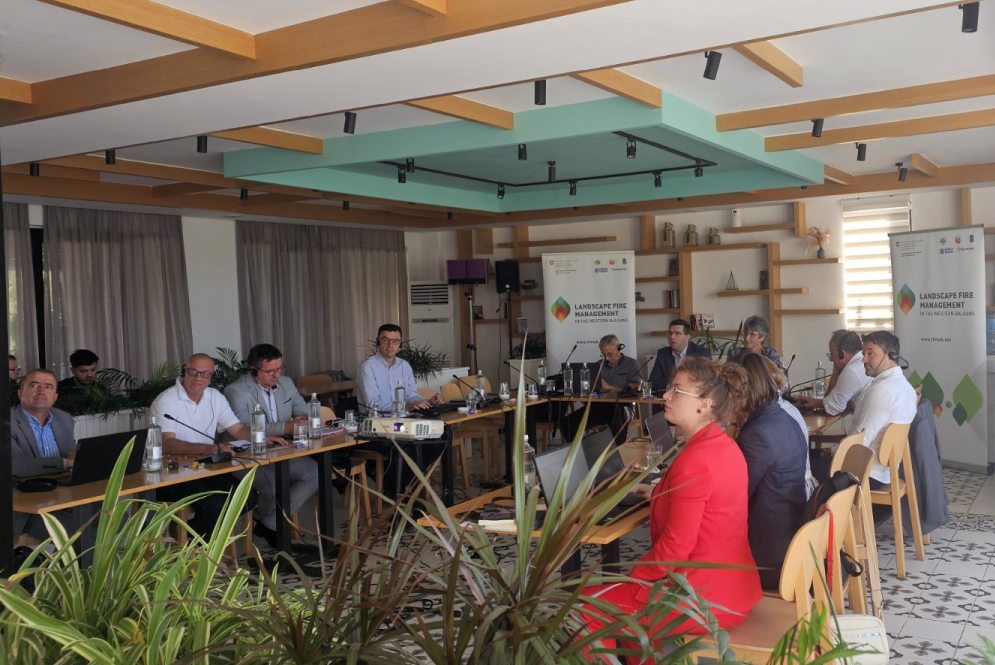
The 9th Meeting of the Steering Committee/Partner Meeting and the 8th Meeting of the Western Balkans LFM Network brought regional partners together to review the Programme’s achievements, implementation in 2026 and developments in LFM across the Western Balkans. Discussions also focused on the cooperation, networks, capacities and knowledge developed during Phase I and the lessons that can guide the Programme’s continued work.
A central part of the gathering was the discussion on the LFMWB Phase II Programme Document (2027–2029). Partners reviewed the proposed priorities and direction of the next phase and reflected on how the foundations established during Phase I can be further developed. The meeting therefore served as an important bridge between the two phases, connecting the achievements and lessons of the past five years with the priorities and ambitions ahead. The conclusion of Phase I was viewed not as an endpoint, but as a starting point for building further on the partnerships, knowledge and capacities developed across the region.
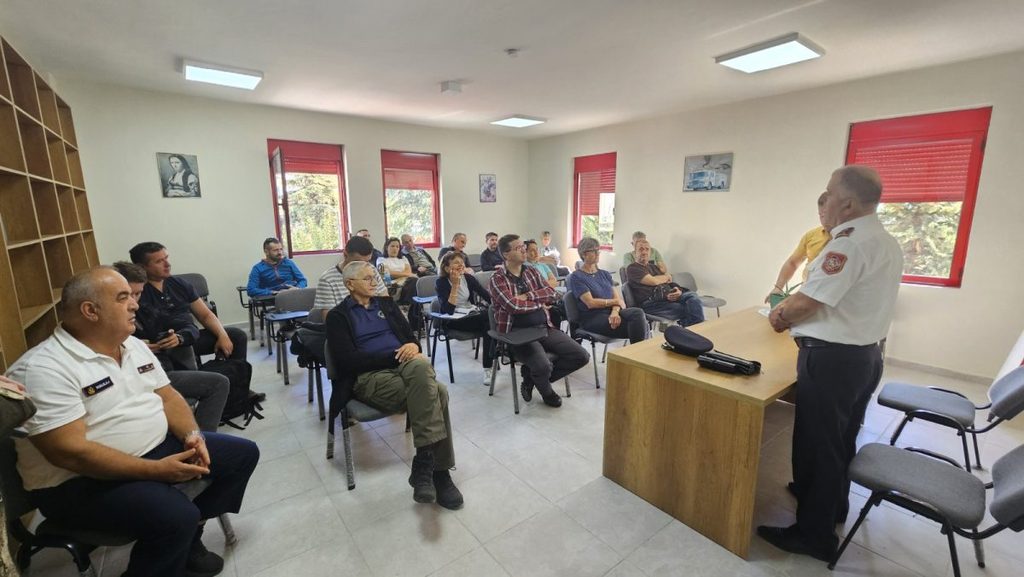
The strategic discussions were complemented by practical field visits. In Berat, participants exchanged with the Regional Administration for Protected Areas and the Berat Fire and Rescue Service on prevention, early detection, incident coordination, operational capacity, access constraints, visitor management and inter-agency cooperation. At the Bogove Managed Nature Reserve, they visited a fire-affected area and discussed damage assessment, erosion risks, natural regeneration, restoration and monitoring. The exchange continued with the Municipal Forest Service of Skrapar Municipality, focusing on local forest management responsibilities, prevention planning, access and water points, community awareness and institutional coordination.
The final visit to Divjake-Karavasta National Park broadened the discussion to the relationship between fire risk, biodiversity, wetlands, coastal forests and visitor management. Participants explored how prevention and preparedness, biodiversity monitoring and inter-institutional cooperation can come together within an integrated landscape fire management approach.
The five-day gathering provided a valuable opportunity to connect strategic reflection with practical experience. As LFMWB moves towards Phase II, the partnerships, knowledge and capacities built during the first phase provide a strong foundation for continued cooperation and stronger landscape fire resilience across the Western Balkans.