
The SDC’s Landscape Fire Management in the Western Balkans (LFMWB) Programme participated in the International Forest Fire Conference, organized by the Swiss Federal Office for the Environment (FOEN) on 17–18 June 2026 in Bern, Switzerland. The conference brought together experts from forestry services, fire and rescue organizations, civil protection authorities, research institutions, and international organizations to exchange knowledge, strengthen cooperation, and discuss integrated approaches to addressing the growing challenges of forest fires.
The conference showcased the progress achieved through the implementation of Switzerland’s Action Plan on Forest Fires (Postulate von Siebenthal: 19.3715), presenting a wide range of practical tools and measures developed to strengthen forest fire prevention, preparedness, response, and post-fire recovery. These include the introduction of the national IGNIS Forest Fire Danger Information System, improved fire danger assessment based on the Fire Weather Index (FWI), new operational guidance and training materials, enhanced public warning systems, and strengthened legal and institutional frameworks for integrated forest fire management.
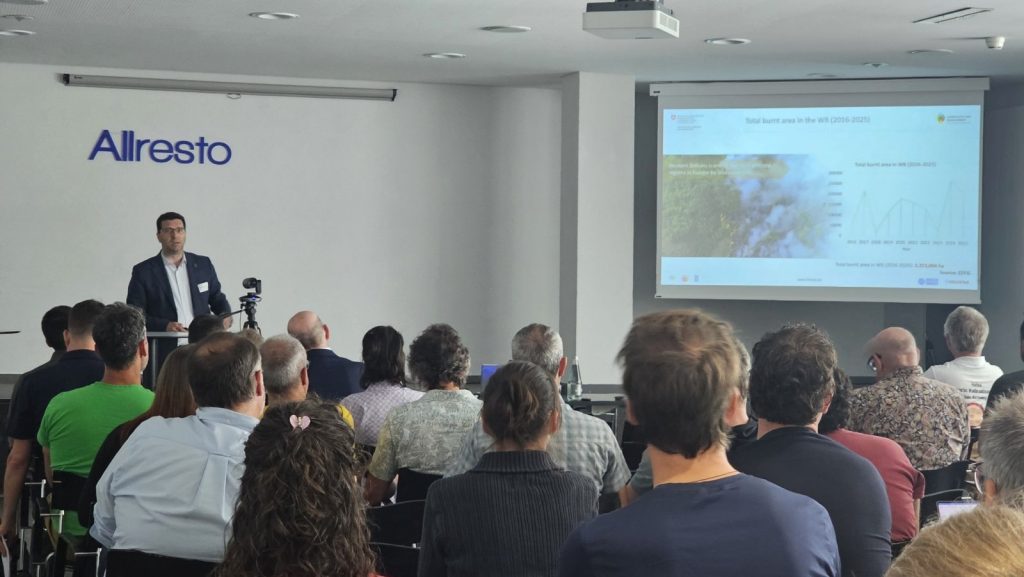
In addition, the conference addressed a broad range of technical, scientific, and operational topics, including close-to-nature silviculture and fuel management measures for fire risk reduction, the implementation of the Canadian Fire Weather Index system, the Nearest Fire Day (NFD) approach, rapid mapping and post-fire assessment tools, and broader European and cross-country cooperation approaches (FoRISK), as well as the social dimension of wildfire resilience and community preparedness under changing climatic conditions.
The first day of the conference focused on international cooperation, innovative tools for forest fire management, and the social dimension of wildfire resilience. During the session dedicated to cross-country cooperation, Cvetan Nikolovski, Team Leader of the LFMWB Programme, together with Jelena Marković, a Programme partner from the Bern University of Applied Sciences (BFH-HAFL), delivered a joint presentation titled “Landscape Fire Management in the Western Balkans: Reflections on Current Results of the Cooperation with Switzerland and within the Western Balkans.”
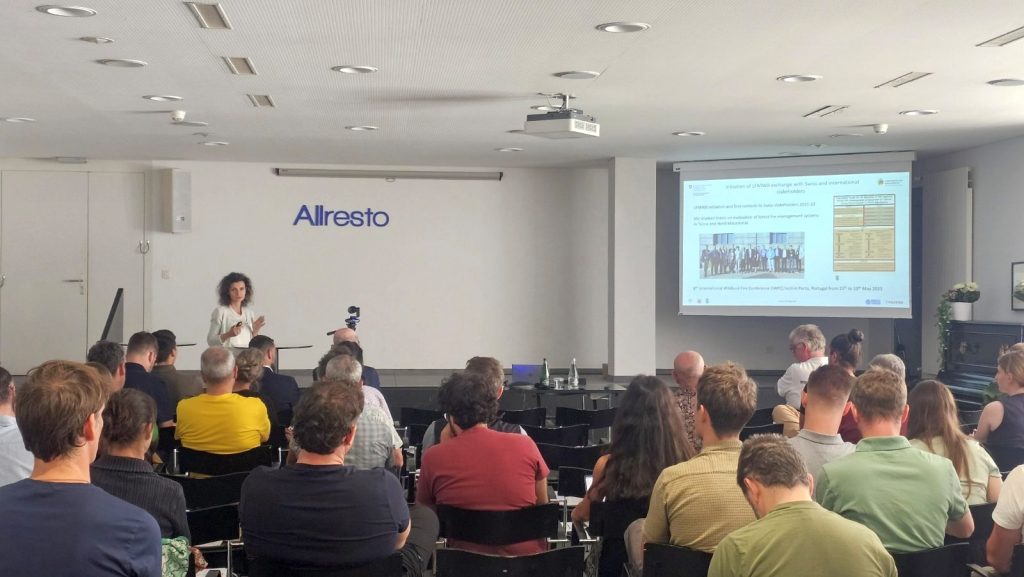
The presentation highlighted the achievements of the LFMWB Programme in strengthening regional cooperation, building institutional capacities, improving knowledge exchange, and supporting the development of integrated landscape fire management across the Western Balkans with a focus on prevention. It also emphasized the strong partnership with Switzerland and the valuable contribution of Swiss expertise in advancing sustainable and coordinated approaches to landscape fire management in the region.
An important topic discussed throughout the conference was the implementation of Switzerland’s Integrated Forest and Wood Strategy 2050, which promotes resilient, climate-adapted forests, sustainable forest management, biodiversity conservation, and improved protection against natural hazards, including forest fires. The strategy demonstrates the importance of integrating forest fire management into broader forest, climate, and environmental policies to ensure long-term ecosystem resilience.
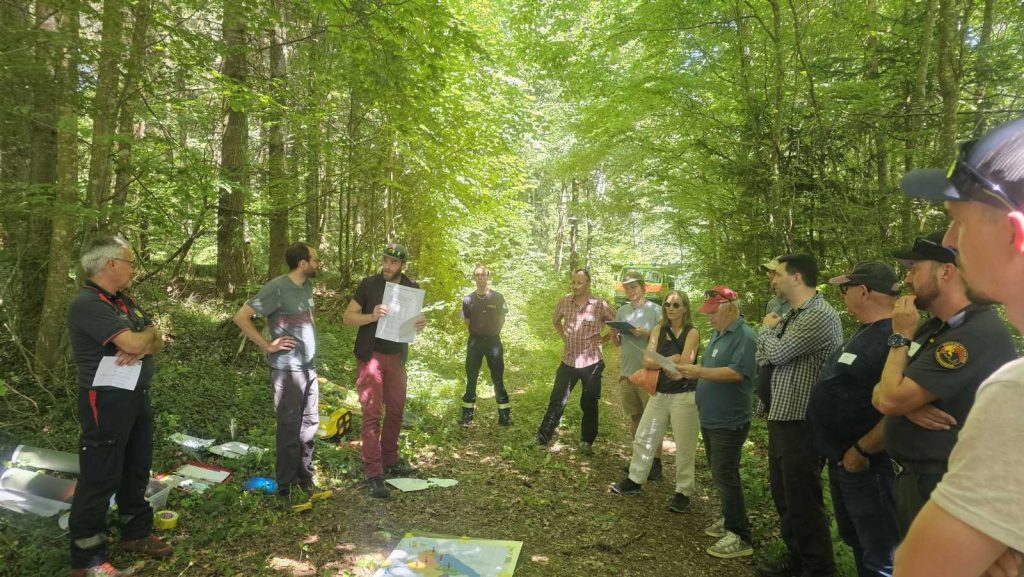
On the second day, participants took part in a field excursion to La Neuveville, where they visited an area affected by a recent forest fire. The excursion provided practical insight into post-fire ecological recovery, restoration measures, and operational firefighting interventions, demonstrating how scientific knowledge and field experience can support more effective forest fire management.
Participation in the conference provided an excellent opportunity to exchange experiences with leading international experts, strengthen existing partnerships, and further promote the Landscape Fire Management in the Western Balkans Programme as a regional platform for cooperation, knowledge sharing, and capacity development. The discussions reinforced the importance of integrated, cross-sectoral, and international collaboration in addressing the increasing risks posed by forest fires under changing climate conditions by shifting the focus on prevention.